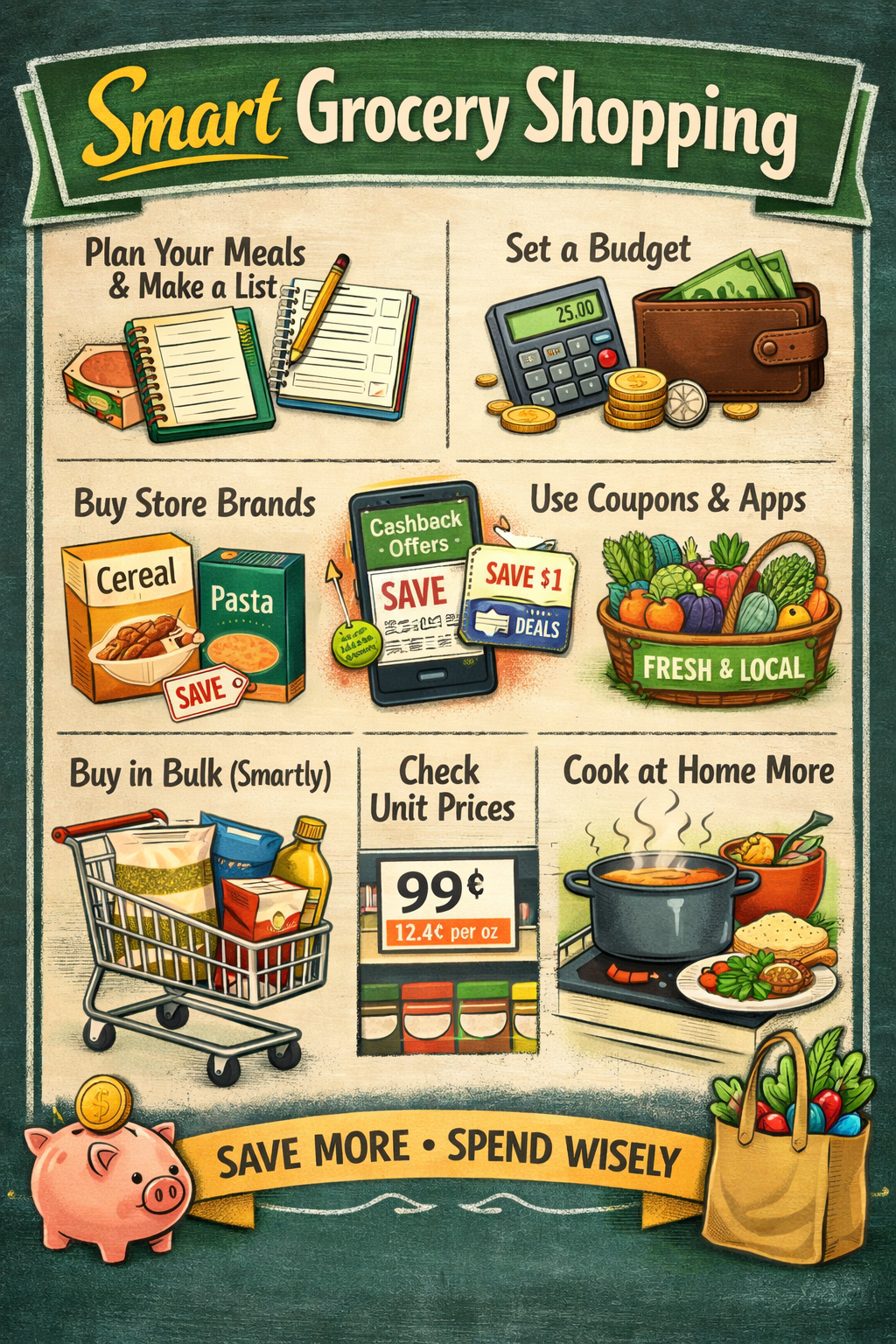
Smart Grocery Shopping: A Practical Guide to Saving Money Without Sacrificing Quality

With grocery prices continuing to fluctuate due to inflation, supply chain shifts, and seasonal demand, learning how to shop smarter has become an essential life skill. The good news? Saving money on groceries doesn’t require extreme couponing or living off instant noodles—it just takes a little strategy, planning, and awareness.
Here’s a comprehensive guide to help you stretch your grocery budget while still enjoying nutritious and satisfying meals.
🛒 Start With a Plan, Not a Cart
Impulse buying is one of the biggest budget killers. Before heading to the store, take a few minutes to:
- Check what you already have at home
- Plan meals for the week
- Create a detailed shopping list
Apps like Mealime or Paprika can simplify meal planning and reduce waste by helping you organize recipes and generate shopping lists automatically.
💵 Set a Budget—and Stick to It
Decide how much you’re willing to spend before you shop. This helps guide your decisions in-store and keeps you from overspending. A helpful trick is to bring a calculator or use your phone to track your running total as you shop.
🏷️ Embrace Store Brands
Generic or store-brand products often come from the same manufacturers as name brands but cost significantly less. Retailers like Kroger, Aldi, and Walmart have built strong reputations for quality store-brand goods at lower prices.
🧾 Use Coupons and Cashback Apps
Digital tools have made saving easier than ever. Consider using:
- Ibotta – Earn cash back on everyday purchases
- Flipp – Browse store flyers and deals
- Rakuten – Get rewards for shopping through the app
Stacking coupons with store sales can lead to serious savings.
🥦 Buy in Bulk (But Be Smart About It)
Bulk buying can save money—but only if you use what you buy. Focus on non-perishables like rice, pasta, canned goods, and frozen items. Stores like Costco and Sam’s Club are ideal for bulk purchases.
🥕 Shop Seasonal and Local
Produce is often cheaper—and fresher—when it’s in season. For example:
- Berries are cheaper in summer
- Squash and pumpkins are more affordable in fall
Shopping at local farmers markets or stores like Trader Joe’s can sometimes offer better deals on fresh items compared to big chains.
🚫 Avoid Shopping Hungry
It sounds simple, but it works. Shopping while hungry leads to more impulse purchases—especially snacks and convenience foods. Eat before you go, and you’ll stick to your list more easily.
📦 Don’t Overlook the Freezer
Frozen fruits and vegetables are often cheaper than fresh and last much longer. They’re picked at peak ripeness and retain most of their nutrients, making them a smart and budget-friendly option.
🧠 Learn Unit Pricing
Most stores display the price per ounce, pound, or unit on shelf tags. This allows you to compare products more accurately—even if the package sizes differ. It’s one of the simplest ways to ensure you’re getting the best deal.
🍽️ Cook More, Waste Less
Prepared foods and takeout cost significantly more than home-cooked meals. By cooking in batches and using leftovers creatively, you can reduce both spending and food waste.
🧂 Simplify Your Meals
You don’t need complex recipes with dozens of ingredients to eat well. Focus on simple, versatile meals that use overlapping ingredients—like rice bowls, pasta dishes, stir-fries, and soups.
Final Thoughts
Saving money on groceries isn’t about deprivation—it’s about making smarter choices. With a little planning, some helpful tools, and a mindful approach, you can significantly reduce your grocery bill while still enjoying delicious and healthy meals.
Start small, build good habits, and over time, those savings will really add up.